

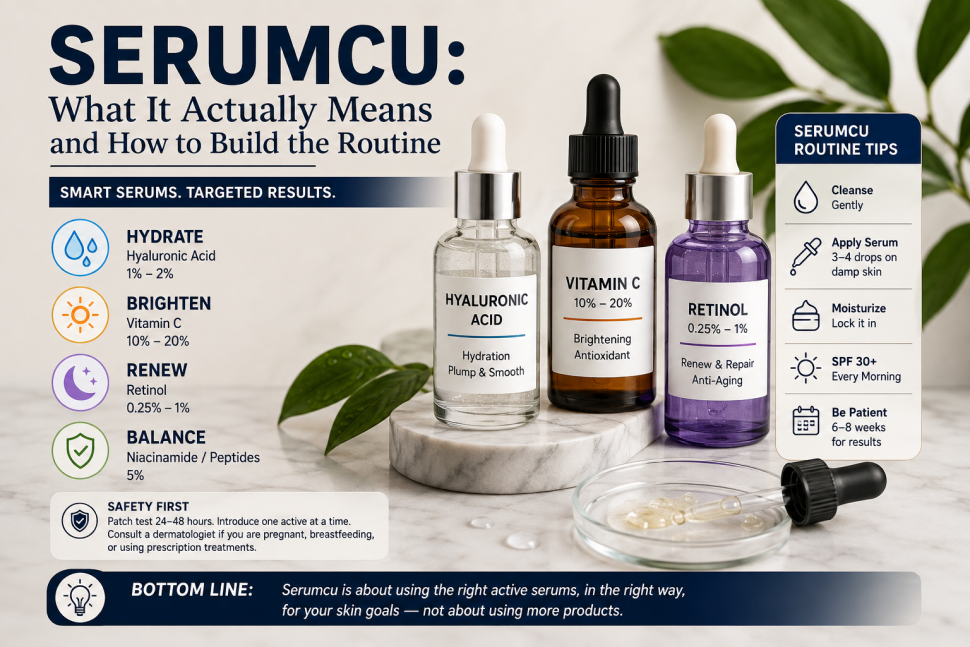
Skincare TikTok started throwing around “serumcu” a while back, then it crept into search results too, no real explanation attached anywhere. Time to actually fix that. Meaning first. Then the stuff most guides conveniently skip, real percentages, what shouldn’t get mixed, a couple safety notes people actually need.
Quick answer, since that’s probably why you’re here: Turkish word “serum” plus the suffix “-cu,” which roughly means devoted to or specialized in something. Together, a serum-focused approach to skincare, one or two targeted formulas over a long generic routine. No brand attached, no certification, just an idea that spread through skincare content. Oh, and separately, “Serum CU” also names a carpet and upholstery cleaner that has nothing to do with skin. Wrong page, if that’s the one you wanted.
The Core Idea, Stripped Down
The logic’s simple enough. Moisturizers stay mostly on the surface, trapping hydration, reinforcing the barrier, but actives don’t really travel deep with them. Serums carry smaller molecules that get further in, which works better for pigmentation, fine lines, collagen loss, that category of problem. Really, serumcu just names the habit of picking a serum for an actual target rather than piling on a dozen products with no clear job among them.
Serumcu Ingredients That Actually Have Evidence Behind Them
Not everything on a shelf earns a spot in a routine (most of it, honestly, doesn’t). Knowing the concentration that actually works matters just as much as knowing the ingredient name – arguably more.
Hyaluronic acid’s the easy one to start with. Holds a lot of water relative to its own weight, so plumping shows up fast, within days if you’re consistent. Most formulas land between 1% and 2%, and here’s the part people miss: higher isn’t automatically better. In a dry room, without a moisturizer sealing it in, it can actually pull moisture out of skin instead of adding it.
Vitamin C’s a bit trickier. Usually shows up as L-ascorbic acid, the sweet spot’s around 10% to 20%, and push past that range and irritation climbs without much extra payoff to show for it. Mornings work best here since part of the job is fighting UV and pollution through the day.
Retinol needs the most patience of the bunch, honestly, no shortcuts here. New to it? Start low, 0.25% to 0.3%, working up toward 0.5% or even 1% over months (not weeks) as tolerance builds gradually. Nighttime only, always. It raises sun sensitivity and breaks down in sunlight anyway, so using it during the day just wastes the stuff.
Peptides and niacinamide round things out, and both play nicer with a routine than the three above. Peptides signal collagen and elastin production rather than hydrating or exfoliating anything directly, and they layer fine with almost everything else. Niacinamide, usually around 5%, balances oil, calms redness, and strengthens the barrier, which is probably why it’s the one most people start with before touching anything stronger.
Serumcu Actives Worth Keeping Apart
Routines go wrong quietly, usually right here. Beginners especially get burned mixing retinol and vitamin C in the same application, both irritating skin at once, so the fix is simple enough: vitamin C in the morning, retinol at night, never sharing a slot. Same story with exfoliating acids stacked on retinol, it just compounds irritation instead of compounding any actual benefit, alternating nights works better than combining outright. Niacinamide breaks the pattern though, plays fine with nearly everything, which explains why so many people start there first.
Building a Serumcu Routine Without Overdoing It
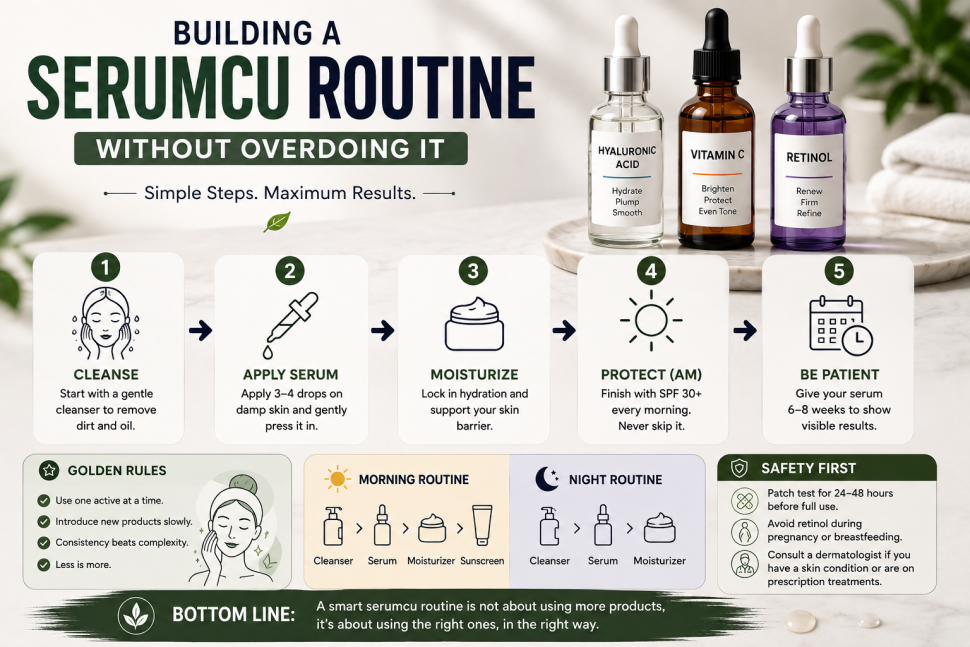
Cleanse gently first, that clears buildup that’d otherwise block absorption. Serum goes on next, skin still a little damp works best since pores stay more receptive right after cleansing, three or four drops pressed in, never rubbed. Moisturizer locks it all in. Mornings get one extra step, SPF 30 or higher, no skipping, actives that raise sun sensitivity basically lose the point without it.
Patience matters more than most people expect going in. Six to eight weeks minimum before judging a new serum fairly, and week four’s exactly when most people give up, right before results usually start appearing for whoever stuck it out a little longer. One active at a time stays the rule too, it’s genuinely the only way to tell what’s working from what’s causing trouble.
Matching Your Serumcu Pick to Skin Type
Oily or acne-prone skin? Lightweight, water-based, niacinamide or salicylic acid, skip anything heavy and oil-based. Dry or dehydrated is a different story – hyaluronic acid needs a ceramide-rich moisturizer riding along with it, or there’s nothing actually sealing that hydration in. It just evaporates right back out, which sort of defeats the point.
Sensitive skin’s a different game entirely. Minimal, fragrance-free, one active introduced at a time, ingredients like centella asiatica or green tea extract for the calming effect. Never stack several new things at once here, it makes troubleshooting a reaction nearly impossible.
And mature skin usually does best with a few actives working together over weeks rather than one alone, retinol plus peptides plus vitamin C, hitting texture, firmness, and tone from different angles at the same time.
Serumcu Safety Notes Worth Knowing Before You Start
Most content on this topic conveniently skips a few things. Let’s not do that. Pregnancy comes first: retinol isn’t generally recommended during pregnancy or while breastfeeding, given the risks involved, so checking with a doctor first just makes sense here. Testing matters too – 24 to 48 hours on a small patch, before going full-face, catches most reactions before they become an actual problem. And if something else is already going on (prescription retinoids, other dermatological treatment, a diagnosed condition), a dermatologist should weigh in before new actives get added. General advice doesn’t always translate to skin that isn’t typical, and pretending otherwise helps nobody.
Frequently Asked Questions
What does serumcu actually mean?
Turkish word for serum, plus a suffix meaning devotee or specialist. Together, that’s a skincare approach built around targeted, active-rich serums instead of a long generic routine. Nothing fancier than that, honestly.
Is serumcu a real brand or product line?
Nope. It’s just a term, an approach really, that picked up traction through skincare content. No company behind it, no certification, nothing official.
Is there another meaning of “Serum CU”?
There is, and it’s got nothing to do with skin at all, a carpet and upholstery cleaner shares the same name, which is exactly why search results get a little confusing.
Can vitamin C and retinol be used together?
Not in the same application, generally. Split them up, vitamin C mornings, retinol nights, and the irritation risk basically disappears.
How long before a serum actually shows results?
Six to eight weeks, minimum, assuming consistent use. Could take longer too, depends on the ingredient and what it’s actually targeting.
Is retinol safe during pregnancy?
Not something doctors generally recommend during pregnancy or while breastfeeding. If either applies, a quick check-in with a doctor before starting anything is the safer move.
Bottom Line
No product here, no certification, serumcu’s just a name for one or two well-matched, active-rich serums beating a long routine with no clear purpose. What’s above, concentrations, timing, safety, matters more than anything printed on a label. Check what’s actually in the formula, keep incompatible actives apart, patch test first, and give any new product real time before writing it off.