

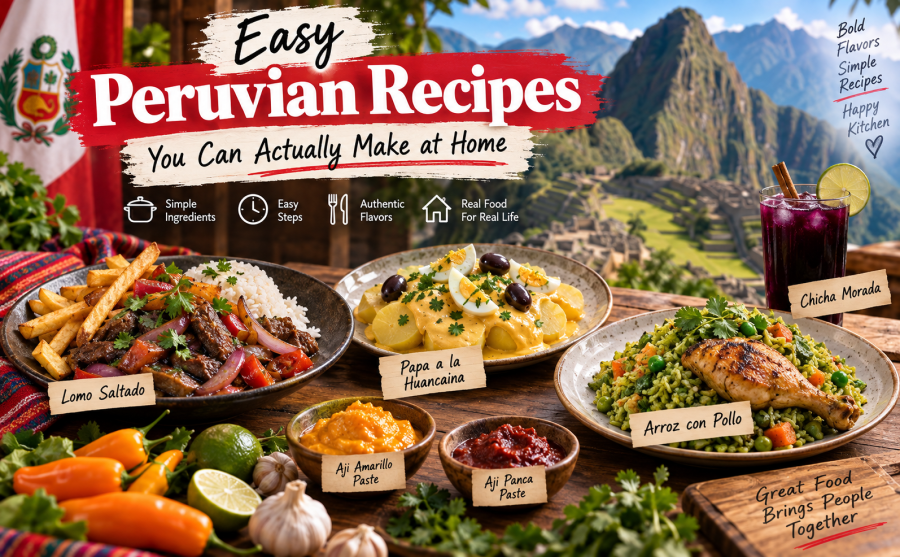
I think Peruvian food has an image problem, honestly. Bring it up and people’s faces do this thing – like you just mentioned a weekend project involving a specialty grocery store two towns over and a cookbook written in a language they don’t speak. That’s not the real story, at least not for the dishes everyone’s actually curious about. Lomo saltado. Papa a la huancaina. Arroz con pollo. Chicha morada if you’re in the mood for something extra. That’s most of the “you have to try this” list, and none of it requires anything you don’t already own. One thing worth buying first, though – a jar of aji amarillo paste. It’s everywhere in this cuisine. Kind of the glue holding a lot of these flavors together.
Why Peruvian Recipes Work So Well for Home Cooking
Short history lesson. Indigenous roots, Spanish colonization on top, African influence woven in, then Chinese and Japanese immigration layered on later. Centuries of that. Which is exactly why the food tastes half-familiar and half-surprising at the same time – you’ll recognize the technique but not necessarily what’s in it. Lomo saltado is the best example I can think of. It’s a stir-fry. Beef, tomato, onion – you already know this move from a dozen other cuisines. Except there’s french fries mixed in. And soy sauce, in a dish that’s technically South American, which still throws people off the first time. That’s chifa – the Chinese-Peruvian influence – and it’s why lomo saltado doesn’t taste quite like anything else you’ve made before.
The Pattern Behind Most Peruvian Dishes
Most of the big dishes here follow that same basic shape: one protein, one sauce doing the heavy lifting, a short list of things to grab at the store. In practice, that means weeknight food, not some ambitious Sunday project. As long as your pantry’s already stocked, anyway. If you want a few more low-effort weeknight ideas beyond Peruvian food, check out our 30-minute dinner recipes roundup.
Pantry Staples for Peruvian Recipes
A few key ingredients keep appearing in almost every recipe below. Gather them before you start cooking, and you won’t find yourself halfway through a dish, suddenly realizing you’re missing something.
- Aji amarillo paste: yellow, fruity, medium heat. Base of huancaina sauce, shows up in a couple stews too.
- Aji panca paste: red, smokier, gentler on the heat. Mostly for marinades.
- Queso fresco: mild, crumbly. Its whole job here is basically the huancaina sauce.
- Soy sauce and red wine vinegar: together, this is most of what makes lomo saltado taste like itself.
- Cumin, garlic, lime: nearly everything savory leans on one of these, sometimes all three at once.
None of it’s exotic once you know where to look. Two or three jars of paste covers most of what’s ahead. If you can’t find them locally, Instacart and most Latin grocery delivery apps carry both pastes.
Lomo Saltado (Peruvian Beef Stir-Fry)
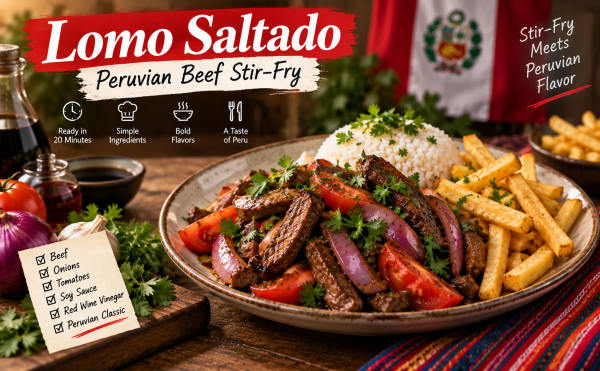
This is where most people start, and for good reason. Twenty minutes, give or take, and a shopping list your regular grocery store probably already covers.
Ingredients (serves 2–3): 1 lb sirloin or flank steak, sliced thin; 1 onion, sliced; 2 tomatoes, cut into wedges; 2 tbsp soy sauce; 1 tbsp red wine vinegar; 2 cloves garlic, minced; frozen or fresh french fries; cilantro, for garnish; salt and pepper.
Method: Get the pan really hot and sear the beef in batches – crowd it and it steams instead of browning, and gray, sad beef helps no one. Pull it out and set aside. Onion and garlic go into the same pan for a minute, then the tomatoes follow. Beef comes back in next, along with the soy sauce and vinegar. Everything gets tossed together for another minute or two, until the sauce clings but the tomatoes are still mostly holding their shape. Serve it over rice, with the fries mixed in or piled on the side – people genuinely argue about which is correct. Cilantro scattered over the top, and you’re basically done.
Papa a la Huancaina (Potatoes in Creamy Chili Sauce)
In Peru, this dish is usually a starter, though it works well as a side here too. Strip away the fancy name and it’s really just a blender sauce poured over potatoes.
Ingredients (serves 4): 6 medium yellow potatoes, boiled and sliced; 1 cup queso fresco; 3 tbsp aji amarillo paste; ½ cup evaporated milk; a handful of soda crackers; hard-boiled eggs and black olives for garnish.
Method: Blend the queso fresco, aji amarillo paste, evaporated milk, and a few soda crackers until the mixture is smooth and thick. Don’t skip the crackers – I know the step sounds unusual, but they’re the key to making the sauce thick enough to cling to the potatoes instead of sliding straight off. Pour it over sliced, still-warm potatoes, and top with egg and olives.
Arroz con Pollo (Peruvian Chicken and Rice)
The Peruvian version goes green, not red – a cilantro sauce gets blended right into the rice while it cooks. It’s a different animal from the tomato-based arroz con pollo you’d find in most other parts of Latin America.
Ingredients (serves 4): 4 bone-in chicken thighs; 2 cups rice; 1 bunch cilantro; 1 cup peas and diced carrots; 1 onion; 3 cloves garlic; 1 cup chicken broth; 1 tsp cumin.
Method: Brown the chicken and set it aside. Blend the cilantro with a splash of broth until smooth. In the same pot, sauté the onion and garlic, toast the rice for a moment, then stir in the cilantro puree, the rest of the broth, and the cumin. Nestle the chicken back in, cover, and simmer around 25 minutes, until the rice is tender and the chicken’s cooked through. Peas and carrots go in during the last five minutes only – any earlier and they turn to mush.
Causa Limeña (Chilled Potato Terrine)
Sounds way more complicated written down than it actually is standing at the counter. It’s mashed potato wrapped around a filling, chilled until it sets.
Ingredients (serves 4): 2 lbs yellow potatoes, boiled and mashed while warm; 3 tbsp aji amarillo paste; juice of 2 limes; 1 cup canned tuna or shredded chicken mixed with mayonnaise; 1 avocado, sliced.
Method: Mix the warm mashed potato with aji amarillo paste, lime juice, and a little oil until smooth – call it your “dough,” for lack of a better word. Half goes into a loaf pan or ring mold. Then the tuna or chicken. Then avocado. Then the rest of the potato on top, sealing everything in. Chill at least two hours before unmolding and slicing. It’s eaten cold anyway, so this one’s genuinely one of the easier make-ahead options – good for a night when you really don’t want the stove on. For more chilled make-ahead ideas, see our make-ahead dinners guide.
Chicha Morada (Purple Corn Drink)

Not really a recipe, more of a fixture – it shows up on basically every table. Comes together easily once you track down dried purple corn, which most Latin grocery stores carry.
Ingredients: 8 oz dried purple corn (chicha morada corn); 1 pineapple rind plus a few chunks; 1 cinnamon stick; 3–4 cloves; sugar and lime juice to taste.
Method: Simmer the corn, pineapple, cinnamon, and cloves in about 8 cups of water – 45 minutes to an hour, until it’s gone a deep, almost black-purple. Strain out the solids. Stir in sugar and lime juice while it’s still warm, since that’s when they actually dissolve in instead of just floating on top. Serve cold over ice, ideally on a day hot enough to actually want it.
What to Cook First If You’re New to Peruvian Food
Lomo saltado, no question. It has the fewest unusual ingredients, uses a technique you already know from stir-frying literally anything else, and gives you an honest first taste of the sweet-savory-acid thing this cuisine keeps doing. Papa a la huancaina is a reasonable second stop – it eases you into aji amarillo paste without much riding on it, and if the sauce comes out slightly off your first try, that’s not exactly a disaster.
Where to Find Aji Amarillo for Peruvian Recipes (and What to Use Instead)
This is the ingredient people end up googling mid-recipe, a little panicked. It comes jarred – Inca’s Food and Goya both make one – at most Latin American grocery stores, some bigger supermarket chains, and a few places online. Genuinely stuck? Habanero with a bit of mustard stirred in gets you somewhere close to that fruity heat. Manzano chile works too if you want to stay milder but keep the fruitiness. Neither is perfect – aji amarillo really does have its own thing going on – but both get you most of the way there.
Common Mistakes to Avoid When Making Peruvian Food
Overcrowding the pan is the big one, probably the most common mistake on this whole list. Lomo saltado wants high heat and room to breathe, so cook in batches, even when dumping it all in at once feels like the obvious shortcut. It isn’t. Skipping the potato-boiling step for causa or huancaina trips people up too – potatoes need to be fully tender before you mash or slice them, or you end up with something grainy instead of smooth. And go easy on the aji amarillo the first time around. It’s stronger than the jar makes it look, so start under what the recipe calls for and adjust from there once you know what you’re working with.
FAQs
Is Peruvian food very spicy?
Not really – aji amarillo paste leans fruity more than fiery, and most recipes leave the actual heat level up to you anyway.
Can I make these recipes without aji amarillo paste?
You can, though the flavor shifts a little. Habanero-and-mustard or manzano chile gets closer than a random hot sauce would.
What’s the easiest Peruvian dish for a beginner?
Lomo saltado. Familiar technique, short list, hard to mess up badly.
Where can I buy Peruvian ingredients in the US?
Latin American grocery stores first. Bigger supermarkets with a real international aisle next. Online if neither one pans out.
Is Peruvian food similar to Mexican or other Latin American food?
Some overlap, sure – potatoes, corn, and chili peppers turn up everywhere in the region – but the flavor itself doesn’t really compare. Chinese and Japanese immigration shaped a lot of what makes Peruvian cuisine distinct, which is exactly why a dish like lomo saltado ends up with soy sauce and a stir-fry method sitting right next to classic South American staples.
The Bottom Line on Easy Peruvian Recipes
Peruvian cooking’s reputation is a little unfair, honestly. The dishes that made it famous – lomo saltado, papa a la huancaina, arroz con pollo – are genuinely realistic on a weeknight once there’s a jar of aji amarillo paste sitting in the fridge. Start with lomo saltado, work outward from there, and the rest of it stops feeling foreign faster than you’d expect. Looking for what to cook next? Browse our full Latin American recipes collection.